Extraordinary Popular Delusions and the Madness of Crowds by Charles Mackay
Book No. 2: Extraordinary Popular Delusions and the Madness of Crowds by Charles Mackay
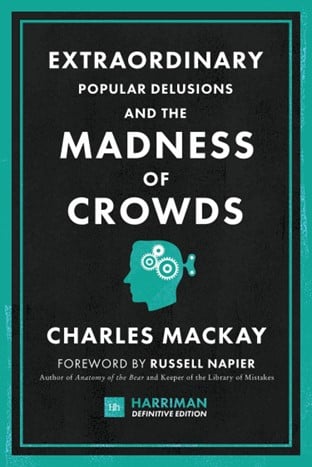
(Source: Amazon.com)
My next pick, first published in 1841, is often cited as the best book about market psychology ever written.
Even though this investment classic first appeared in press 180 years ago, the topic Extraordinary Popular Delusions and the Madness of Crowds examines is as timeless as ever.
Generation after generation, market cycle after market cycle, mobs sometimes form as spontaneously as a tornado. Then they rip through the stock market to produce wild speculative extremes.
Again, this phenomenon isn’t new. It is at least as old as Holland’s “tulip bulb mania” of the early 1600s. This fascinating tale of excess featured a multiyear speculative frenzy for exotic tulip bulbs that topped out in 1637.
At the peak of the mania, a single bulb changed hands for 5,200 florins, which was more than three times what Rembrandt charged for painting “The Night Watch” just five years later.
According to Mike Dash, who wrote Tulipomania: The Story of the World’s Most Coveted Flower & the Extraordinary Passions It Aroused…
[5,200 florins] was sufficient to purchase one of the grandest homes on the most fashionable canal in Amsterdam for cash, complete with a coach house and a [small] garden – and this at a time when homes in that city were as expensive as property anywhere in the world.
This particular comparison is not merely theoretical. Earlier in the tulip mania, the owner of a prime townhouse in Amsterdam offered to exchange it for 10 bulbs of the coveted Semper Augustus.

(Source: Focus-Economics.com)
The book captures the two main emotions – fear and greed – that take over during fast-moving market trends. It's a timeless reminder to keep a cool head when other investors are losing theirs, by panicking in the midst of market turbulence.


Comments
Post a Comment